
Your Guide to Detoxing Off of Kratom
Kratom is often marketed as a natural or herbal product, but regular use can still lead to tolerance, physical dependence, and withdrawal. Some people begin using kratom for pain, energy, mood, or to manage withdrawal from other substances. Over time, however, they may find that stopping is more difficult than expected, especially when using concentrated extracts, high-potency 7-OH products, or other kratom-related compounds.
At The Coleman Institute, we offer a five-day outpatient kratom detox program for people who are ready to become substance-free. Our abstinence-based approach uses non-addictive comfort medications and carefully supervised microgram doses of naltrexone when medically appropriate. We do not use Suboxone or methadone during our kratom detox program.
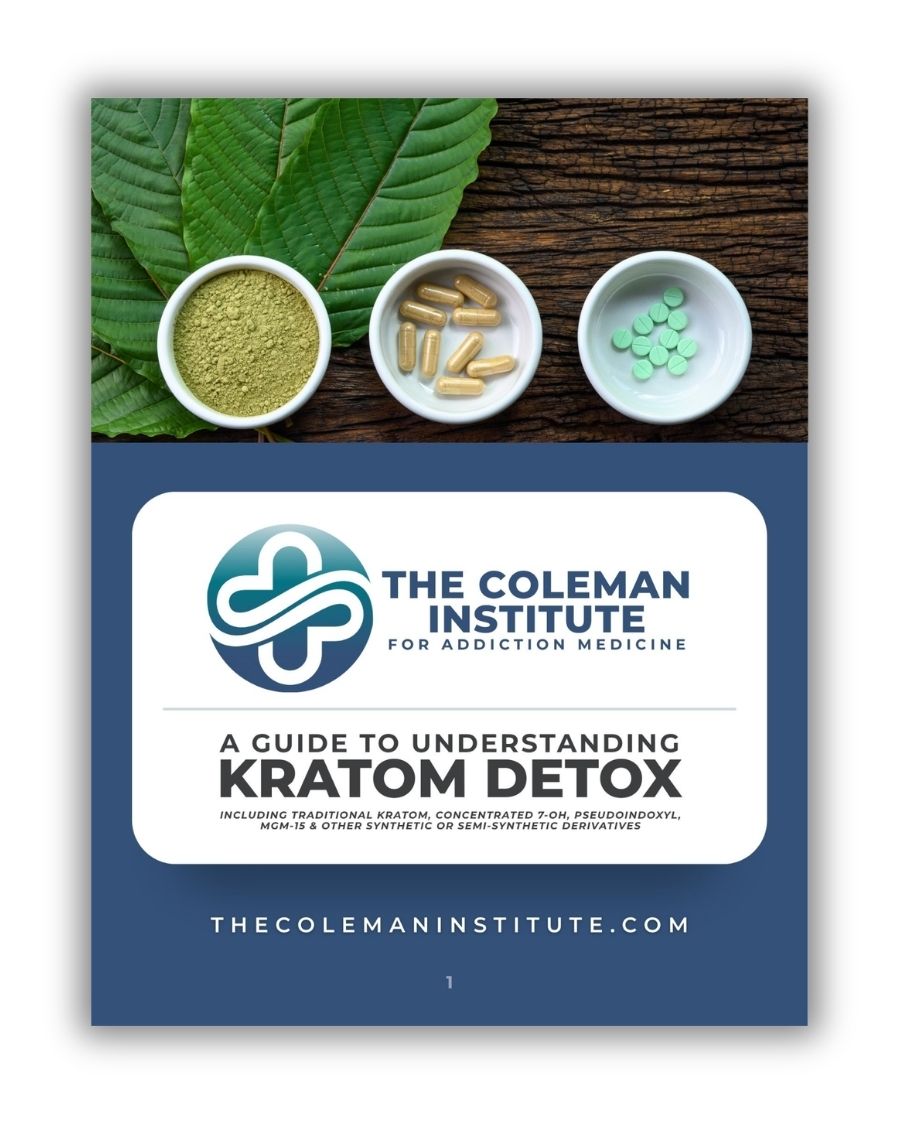
In this guide, you will learn:
- What kratom is and how it affects the brain
- How kratom use can lead to tolerance, dependence, and withdrawal
- The differences between traditional kratom and products such as extracts, 7-OH, mitragynine pseudoindoxyl, MGM-15, and nano kratom
- What to consider when looking for treatment options
- What to expect at The Coleman Institute
- And much more
Complete the form to get your free guide!
Complete The Form To Get Your Free Guide
In the Guide: An In-Depth Look at Kratom Use, Withdrawal, and Our Outpatient Detox Program
Today’s kratom market extends far beyond traditional leaf powder and tea. Products may include capsules, liquid extracts, shots, gummies, concentrated 7-OH products, mitragynine pseudoindoxyl, MGM-15, and nano kratom. The potency and composition of these products can vary significantly, making it difficult for consumers to know exactly what they are taking.
Although kratom is not a traditional opioid, several of its alkaloids interact with opioid receptors in the brain. With repeated use, the body can become dependent on these effects. Attempting to reduce or stop use may then cause withdrawal symptoms such as muscle aches, sweating, nausea, restlessness, anxiety, irritability, insomnia, and strong cravings.
Here is more of what you will find in our free kratom detox guide:
Understanding Kratom-Derived Products
Learn what kratom is, why people use it, and how the market has expanded from traditional botanical products to increasingly concentrated kratom extracts and kratom-related compounds. The guide explains important differences among kratom products.
How Kratom Dependence Develops
Regular use can cause the body and brain to adapt to kratom’s effects. As tolerance develops, some people take larger amounts, use products more frequently, or switch to stronger formulations. The guide explains common signs of kratom dependence and why withdrawal can make stopping difficult.
Choosing A Kratom Detox Method
The Coleman Institute takes an abstinence-based approach. Our goal is to help patients become substance-free without replacing kratom dependence with Suboxone or methadone. The guide compares common approaches and explains why medical screening matters before starting treatment.